



15 Jun Why the Best Events Capture More Joy: The Powerful Combination of Photo Booths and Traditional Photography
Most corporate galas in Manhattan hire a photographer, get their event covered, and never stop to consider what guests actually wanted from the night — which, almost inevitably, differs from what the host envisioned.
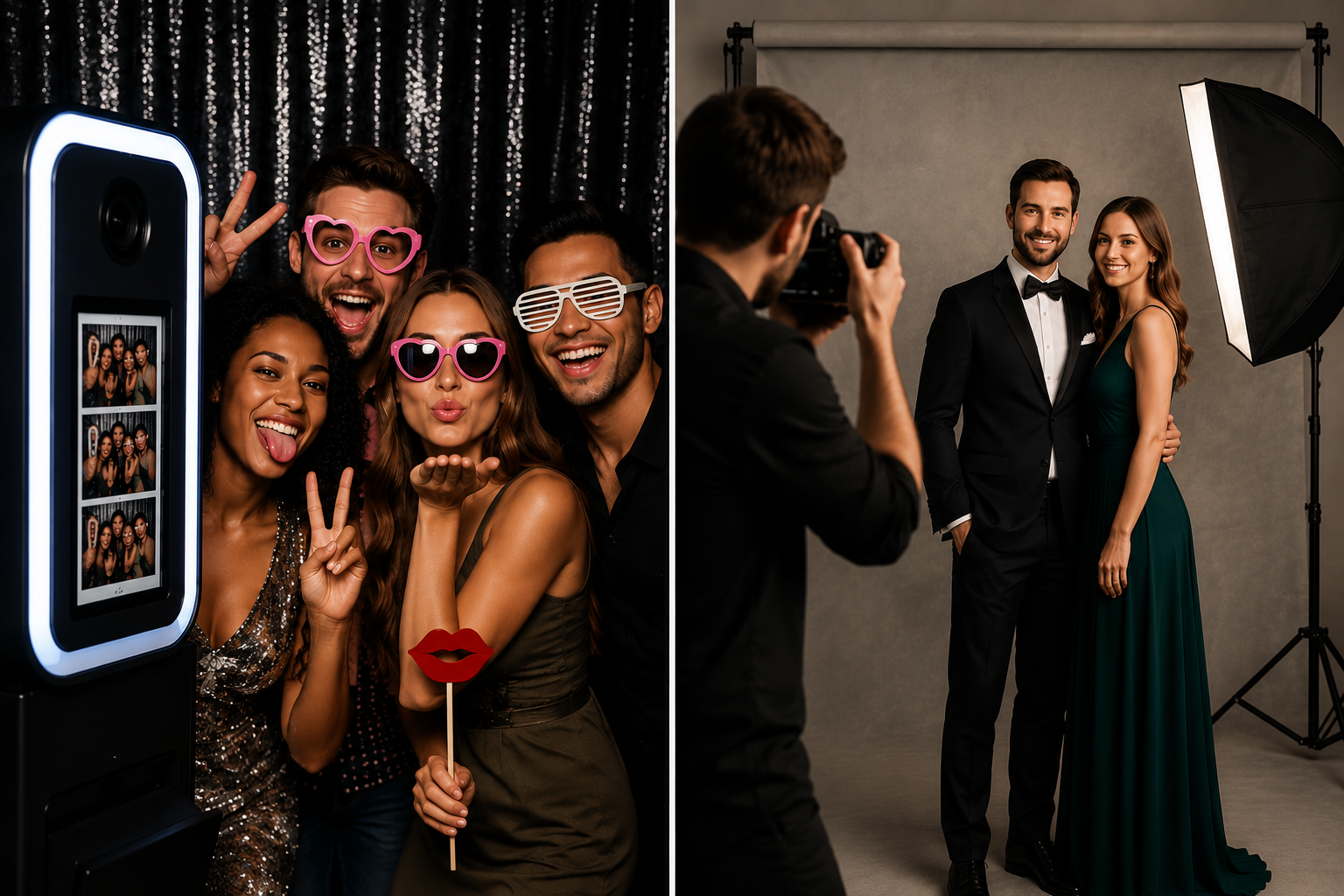
We’ve been photographing events across New York for nearly two decades, and the gap between what a professional photographer delivers and what guests cherish as memories only seems to grow wider: a photographer documents; a photo booth participates. These are two fundamentally different experiences, and the planners who recognize this distinction are creating the events people talk about long after the lights go down.
The debate over photo booth vs. traditional photography is a false choice — it always has been. The key is how you combine them: the logistics, the timing, the physical placement. That’s where most events either shine or end up underwhelming, wasting money on both without maximizing the experience.
Neither One Does What The Other Does
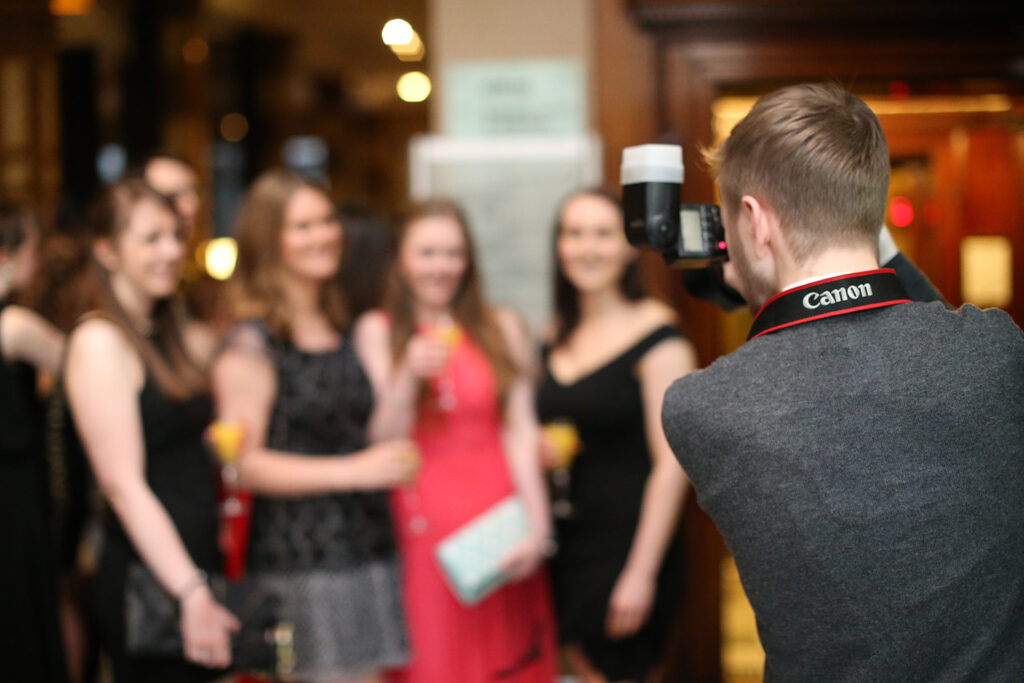
A professional event photographer works the room reading light, anticipating authentic moments, and adjusting angles on the fly. They capture the keynote speaker’s gesture, the spontaneous laughter between colleagues, the wide shot that shows the venue at capacity. That skill takes years to hone, producing the images your annual report, website, and press recaps truly need.
A photo booth serves a different purpose — and that’s by design.
Photo booths shift the experience to the guest. They give people permission to let loose: you see coworkers who barely talked during the year suddenly donning ridiculous props, posing with friends, and leaving with keepsake strips that stick to their fridge for years. The booth creates participatory moments that would never happen in front of a traditional photographer. No one asks a roaming photographer to pose with a feather boa — but at the booth, inhibitions vanish.
We’ve witnessed this countless times. The photographer gets the shots the client needs; the booth provides the images guests actually want. Book only one and you risk missing out on part of your event’s full potential.
A frequent mistake: planners who think a photo booth replaces the need for roaming photography during cocktail hour. Ironically, that’s when the best candid material emerges — the arrivals, the excitement, the energy before guests settle in. A booth during cocktail hour is perfect for guest engagement, but it doesn’t capture the natural, ambient moments. For that, you’ll always need a photographer moving through the scene.
Photo Booth Event Photography Logistics Get Messy Fast
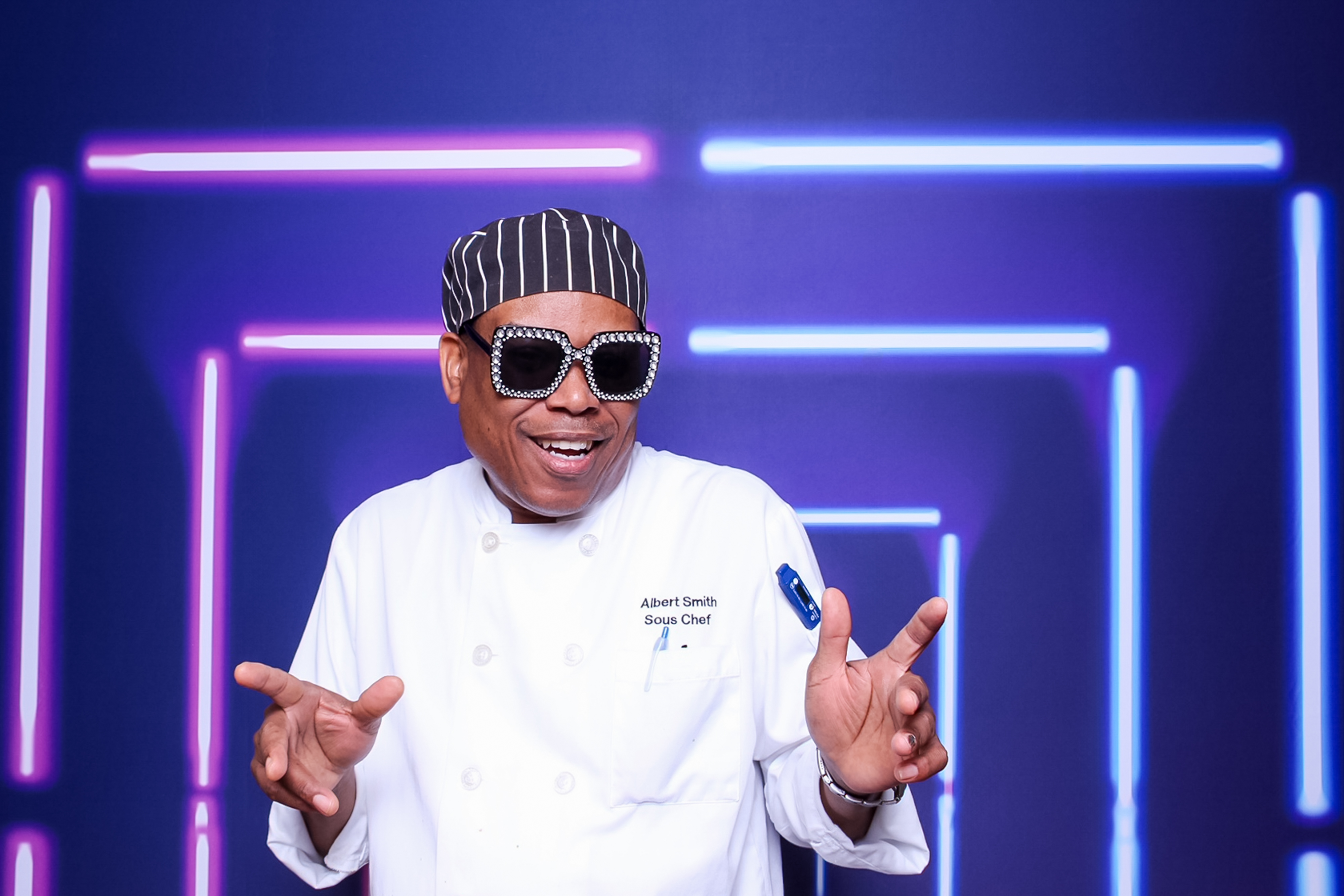
Here’s where the operational truth begins to diverge from Pinterest ideals.
Placing a photo booth in an event space seems straightforward until you try it firsthand. The booth needs reliable power — not just a daisy-chained extension cord tucked under a rug. It requires a properly sized backdrop area that doesn’t interfere with the photographer’s sight lines, with enough space for a short queue that won’t block a fire exit or disrupt food service. We’ve seen booths set up right in front of a floor-to-ceiling window in Midtown, only to discover that natural backlight ruined the booth prints.
Coordination between your photographer and your booth operator is more critical than most planners expect. If the booth uses a ring light or strobe, that flash can spill into the photographer’s exposure, especially in the same area. Establishing some physical separation — or a visual barrier — ensures both setups work optimally. In most New York venues, which tend to be tighter than you think, this typically means putting the booth in a secondary room, alcove, or off main event traffic.
Timing is another logistical hurdle. If you want group portraits with the photographer while guests are cycling through the booth, you’ll quickly find both vying for people’s attention at the same peak moments. A smarter approach: coordinate the shot list and the booth schedule so that formal group photos happen while the booth is closed or on pause. This prevents having to hunt down half your bridal party just as they’re lining up for the booth with oversized sunglasses.
Real issues We’ve observed when both run side-by-side:
Booth attendants readjusting their backdrop and unplugging a power source that’s also supporting the DJ, Guests mistaking booth prints for “official” photos and skipping the portrait station, Booths near the dance floor creating bottlenecks, inadvertently blocking the photographer’s planned vantage point for key moments like the first dance, and Booth print overlays or logo templates that clash with the event’s visual identity because no one coordinated with the designer.
That last one may sound trivial, but it’s not. When a corporate client sees beautiful, on-brand event photos next to booth strips with a mismatched logo or garish font, it can undermine the visual cohesion of the entire event’s media.
Benefits of Having Both Photo Booth and Traditional Photography
Booking both isn’t about extravagance — it’s about maximizing coverage and elevating the guest experience through two separate but complementary lenses.
Traditional event photography provides your archival record: the “hero” images that justify your event spend to stakeholders, or preserve milestone moments for years. These are meticulously edited, color-corrected, and curated in a gallery. This level of polish is only possible because your photographer’s sole focus is documentation, not guest entertainment.
The photo booth, by contrast, delivers instant gratification and fuels social sharing. Guests walk away with physical prints or digital keepsakes they can post before the event is even over. This real-time content does what a curated gallery can’t — it widens your event’s organic reach, sometimes before dessert is served. For corporate events, that’s exposure you don’t have to manufacture; for weddings, it’s what makes people feel like true participants, not just attendees.
When combined, the result is a richer, more complete narrative. You get both the editorial, “wow” shots and the quirky, personal, unscripted moments. Clients who skip the booth often say, “The photos are gorgeous, but I wish we had more fun shots.” And events that skip a photographer and only have a booth? The organization often ends up with nothing suitable for their website or post-event communications.
When to Skip the Booth Entirely
The occasions to forgo a photo booth are few and far between.
Three scenarios where a booth usually isn’t the right choice: highly intimate gatherings with fewer than thirty guests, where a booth feels awkward or ignored; ceremonies or memorials, where the tone doesn’t suit playful props or take-home strips; and spaces with such limited power or square footage that a booth would disrupt, not enhance, the event. Outside these exceptions, most events benefit from the addition of a booth.
Should I Book Photo Booth and Photographer Together?
The order in which you book these vendors makes a big difference — sometimes more so than simply booking both.
Always start with your photographer. Their priorities — shot list, timeline, and spatial needs — should drive the structure of your event’s visual coverage. The booth operator should then fit around those needs. If you reverse this order and try to fit a photographer into whatever space is left over after the booth is booked, the results can be limiting: a photographer forced to shoot against an inappropriate backdrop or battling color spill from the booth’s lighting can’t deliver clean, cohesive images.
A real-world example: at a Chelsea holiday party, the booth had a prominent, sparkling sequin backdrop in the center of the main floor. It looked incredible, but left the photographer with no neutral wall for executive portraits, and the booth’s bright ring light created visible color differences in wide-angle shots that included that area. We corrected it in post, but a quick pre-event conversation could have avoided the issue entirely.
The ideal workflow: Book your photographer, share a floor plan, and let them mark preferred shooting spots and lighting needs. Then, invite the booth operator to place their setup in a way that won’t compete. If both vendors are open to a brief walkthrough — or at minimum, a phone call — you’ll avoid most coordination headaches.
For weddings, the booth typically opens at the reception — after formal photos wrap, after the couple’s entrance. This timing ensures the photographer can focus on critical shots without distractions, while guests enjoy playful photos as the night moves forward. For corporate events, the booth may open earlier, but it’s still vital that its operation doesn’t disrupt pre-planned group photos, speeches, or key moments.
Crucially: Make sure your photographer and booth operator exchange direct contact info before the event (not through you). Day-of adjustments are inevitable, and fast communication between them can head off issues before they reach you or your planner. This single step saves more headaches than any amount of advance scheduling.
Working With 5th Avenue Digital In New York
We’ve been expertly blending photographer and photo booth coverage for Manhattan events since 2015. If you’re planning an event and want a seamless integration of both classic and interactive photography, we’ll design a tailored coverage plan: mapping out photographer positions, optimal booth placement, and scheduling windows before event day arrives. Reach out to 5th Avenue Digital, and we’ll build a solution that fits your venue, timeline, and style.